

Kärcher · Auto-scrubbers
BR 30/4 C · Compact auto-scrubber
Reference 1.783-221.0
Corded model for small spaces and narrow passages. The roller scrubs and the suction lips recover water.
- Reference
- 1.783-221.0
- Brand
- Kärcher
- Category
- Auto-scrubbers
- Model information
- 30 cm
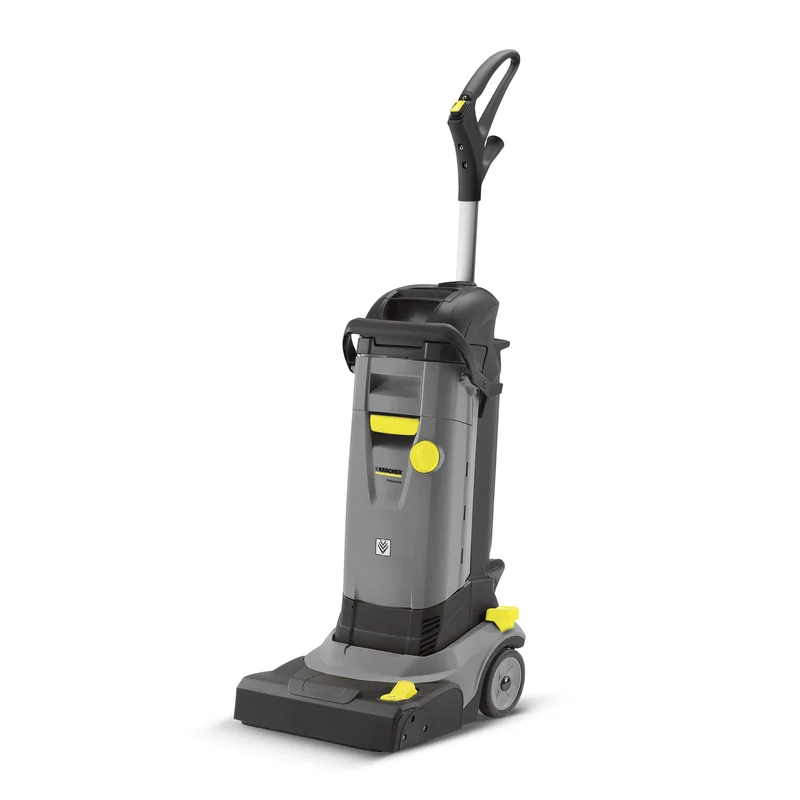
Hover to explore depth. Zoom, then drag to inspect a detail. Keyboard: +, −, arrows and 0.
Product photograph. Other sides are not available.
The product in detail
The BR 30/4 C is a compact corded scrubber for small areas and narrow passages. A roller washes while flexible blades recover water in forward and reverse travel. The 4 L tanks can be removed separately or together; a pedal can disable suction for an approved two-step method.
Listed specifications
Values come from the supplier documentation consulted. Performance depends on conditions and configuration. The supplied reference’s container or nameplate and manual determine its use.
| Specification | Listed value or configuration |
|---|---|
| Brush working width (mm) | 300 |
| Vacuum width (mm) | 300 |
| Clean/recovery tanks (l) | 4 / 4 |
| Theoretical area output (m²/h) | 200 |
| Practical area output (m²/h) | 150 |
| Brush speed (rpm) | 1450 |
| Water consumption (l/min) | 0.3 |
| Sound pressure level (dB (A)) | 70.5 |
| Voltage (V) | 120 |
| Frequency ( Hz ) | 60 |
| Power input (W) | 700 |
| Dimensions (L × W × H) (mm) | 390 x 335 x 1180 |
| Listed contact pressure | 100 g/cm² |
Surfaces and compatibility
For hard floors that permit machine scrubbing and water recovery. Identify the covering, finish, joints and level changes before choosing a brush or pad.
The sales text mentions clean water and also detergent for deeper cleaning. Select the procedure using machine and flooring instructions rather than a general introductory sentence.
Preparation and use
- Remove large loose debris and clear the route. Mark the work area.
- Inspect brushes, squeegee blades, filters, tanks and power supply.
- Fit approved consumables and dose a cleaner compatible with floor and machine.
- Test suitable settings. Monitor scrubbing and water recovery, particularly when turning.
- Empty the recovery tank before it overfills and inspect results after drying.
Care and storage
Rinse tanks and filters as instructed. Clear debris from blades and brushes and check wear. For battery models, follow the specified charger, ventilation and charging cycle. Inspect and store cords on mains models.
Limits and things to check
Cleaning width is not always overall width: measure the squeegee, turns and doorways too. Actual output includes filling, emptying, obstacles and travel. Water streaks call first for checking blades, hose and tank.
Equipment, accessories and options
The page lists a roller, transport wheels and suction tools. Any alternative roller or detergent must suit the floor.
Practical questions
How do I check this reference suits my floor?
Identify flooring, finish and task, then check both product and flooring instructions. A hidden-area test should reproduce full application and drying. For equipment, also check tools or pads, dimensions and power supply.
Are all accessories and consumables included?
The page lists a roller, transport wheels and suction tools. Any alternative roller or detergent must suit the floor.
What information is still needed before purchasing?
Confirm weight, cord length and roller and detergent suited to your surface.
Why might results differ from the listed output?
Figures describe different things: working path, theoretical or practical output, power and runtime by mode. Filling, emptying, charging, obstacles, consumable condition and technique influence actual work completed.
In the same selection
Kärcher
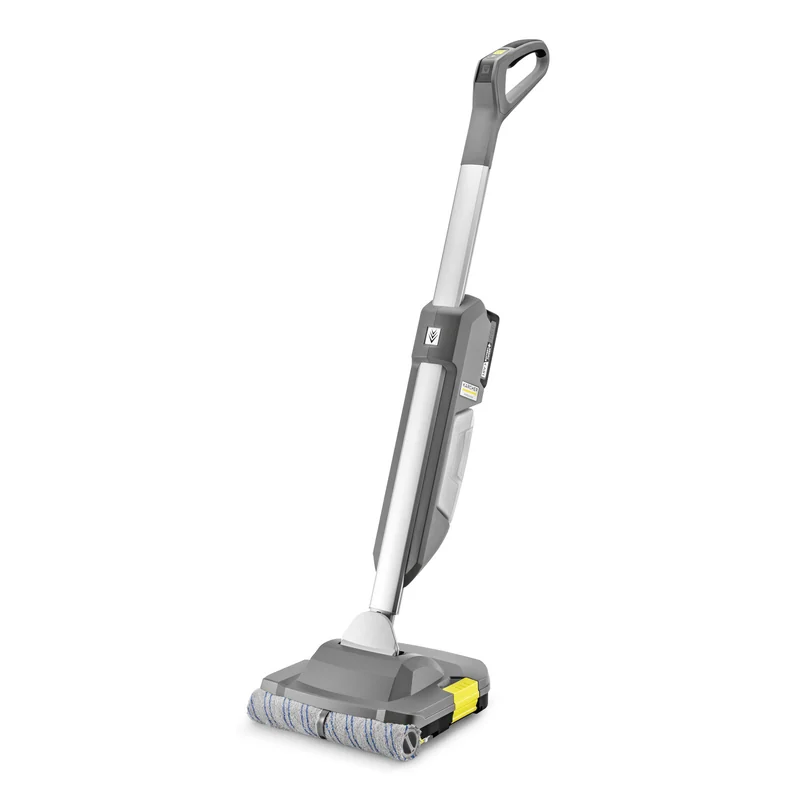
BR 30/1 C Bp Pack · Cordless microfibre scrubber
For routine care of small hard-floor areas where damp cleaning is allowed, including ceramic tile. Its microfibre rollers clean and pick up water.
Explore this product ↗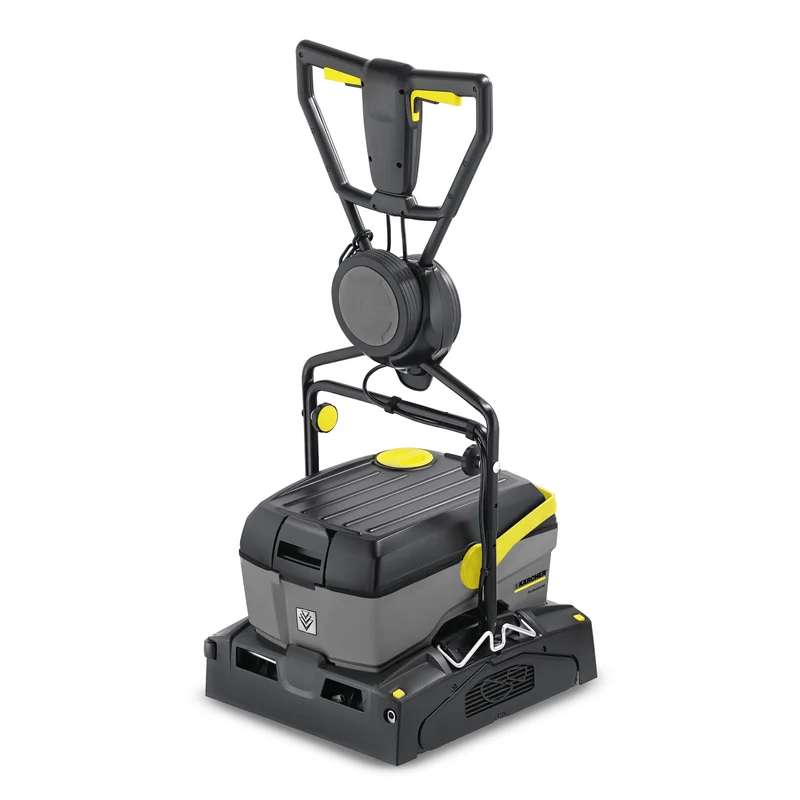
Kärcher
BR 40/10 C Adv · Dual-roller auto-scrubber
For washing compatible hard floors. For textured tile or porcelain stoneware, check the roller and cleaner selection for the surface.
Explore this product ↗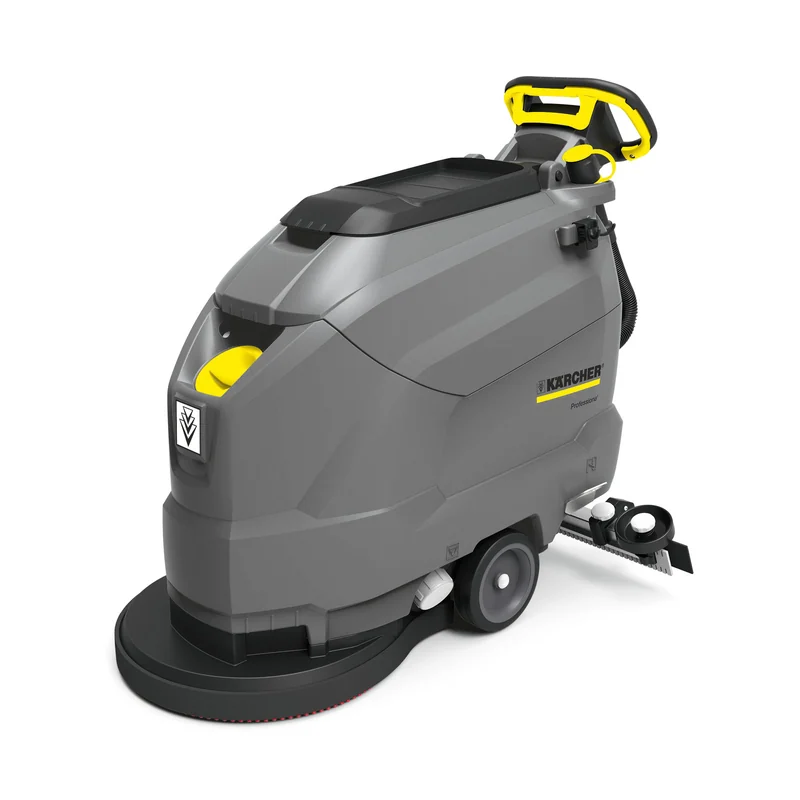
Kärcher
BD 50/50 C Bp Classic · Disc auto-scrubber
Battery-powered walk-behind model with a 52 L clean-water tank. Match the brush or pad to the flooring.
Explore this product ↗