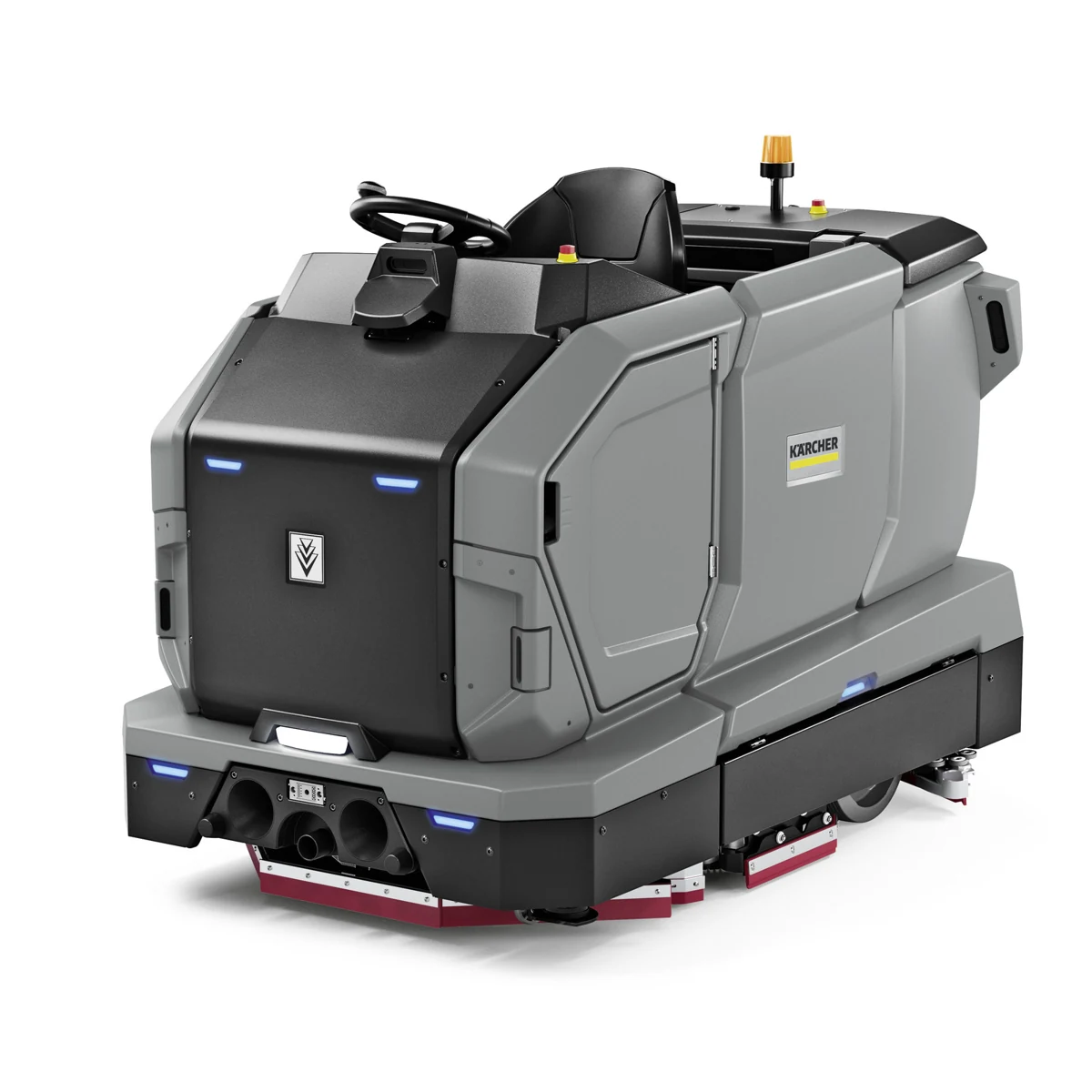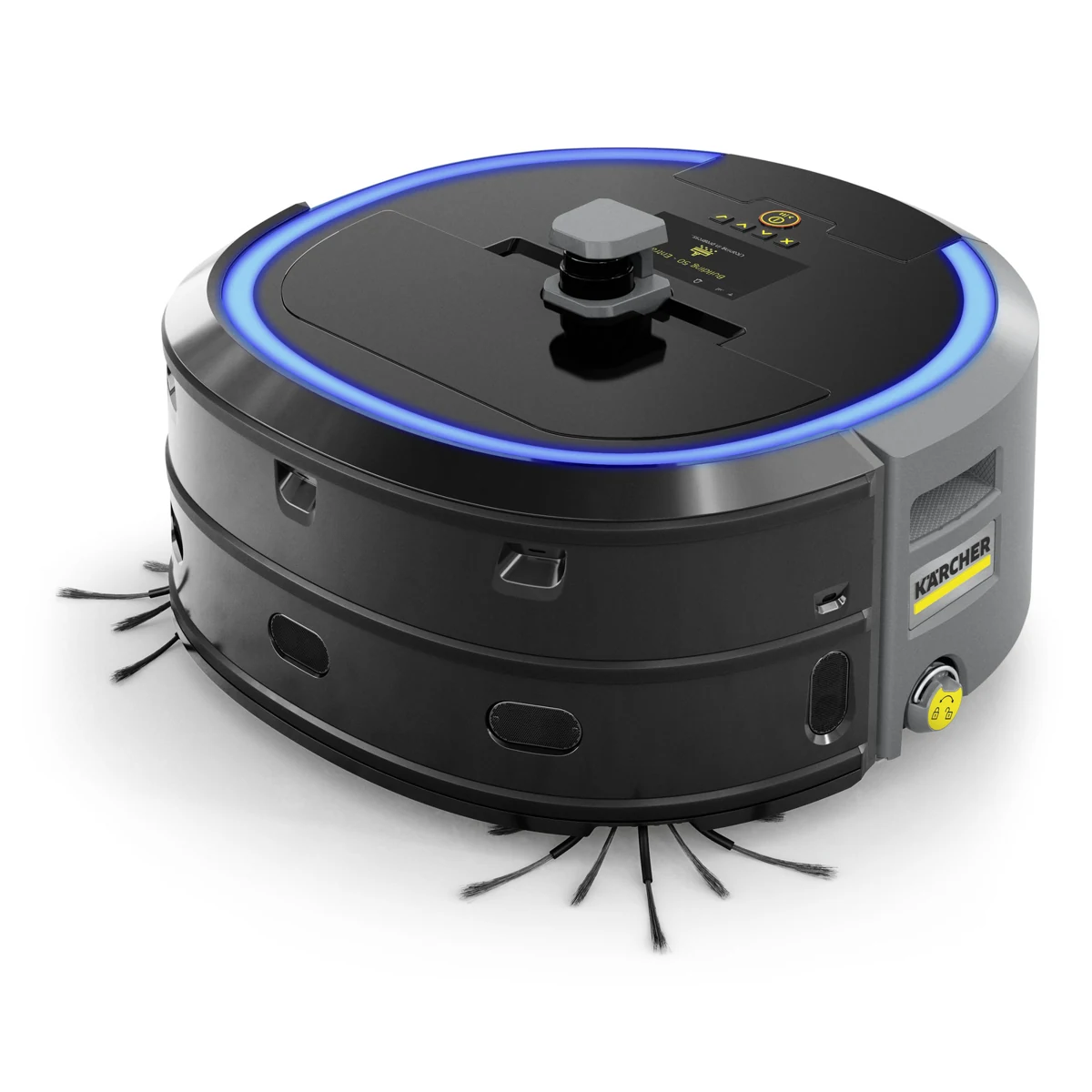

Kärcher · Commercial cleaning robots
KIRA B 50
Reference kira-b-50
Scrubber dryer for medium to large areas.
- Reference
- kira-b-50
- Brand
- Kärcher
- Category
- Commercial cleaning robots
- Model information
- Hard-floor scrubbing
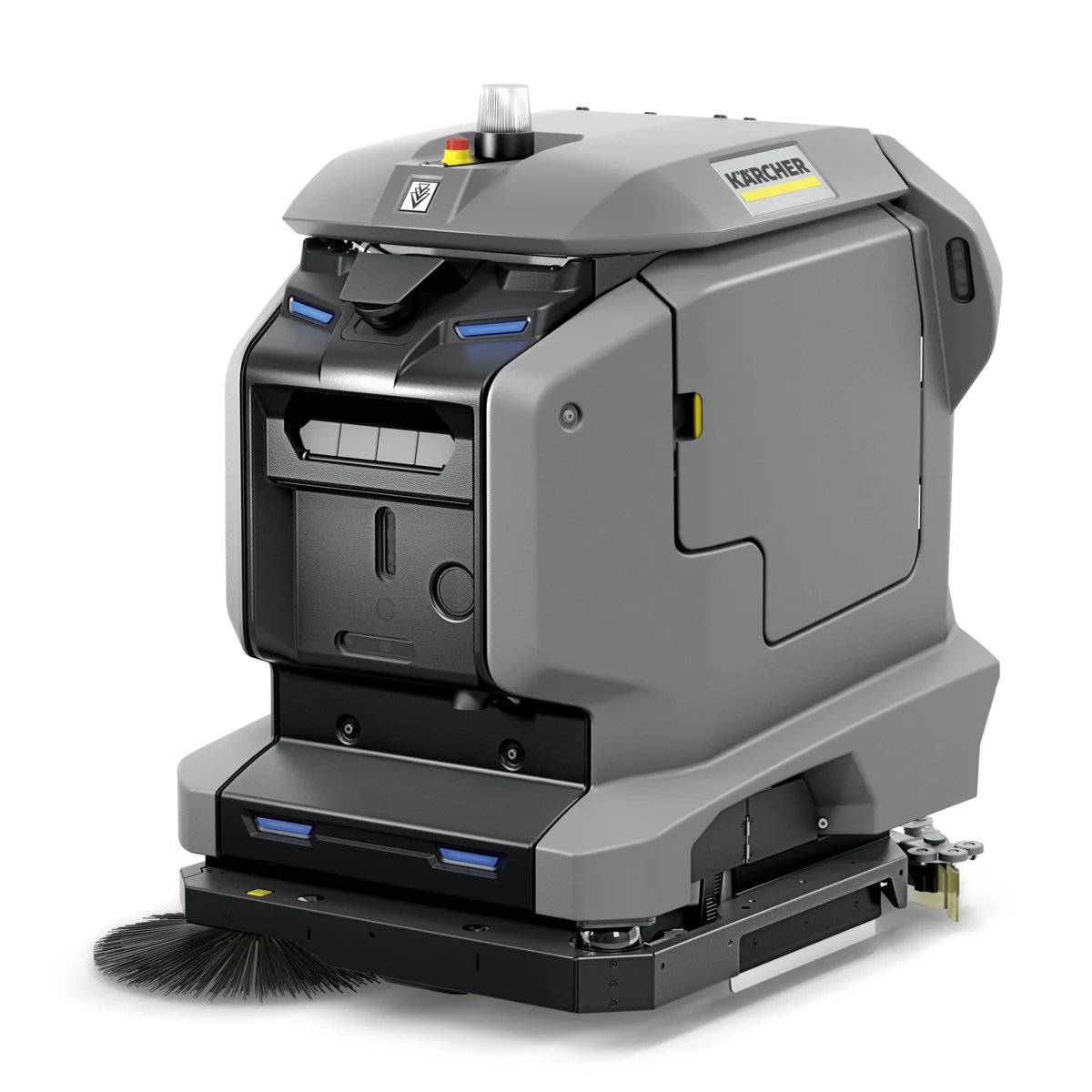
Hover to explore depth. Zoom, then drag to inspect a detail. Keyboard: +, −, arrows and 0.
Product photograph. Other sides are not available.
The product in detail
The KIRA B 50 automates hard-floor scrubbing on medium to large areas. The 2025 catalogue describes B 50 W with cylindrical brushes, presweeping, side brush, touchscreen and autonomous or manual modes. An optional station can handle charging and water operations according to configuration.
Listed specifications
Values come from the supplier documentation consulted. Performance depends on conditions and configuration. The supplied reference’s container or nameplate and manual determine its use.
| Specification | Listed value or configuration |
|---|---|
| 2025 catalogue version | B 50 W / 1.533-002.0 |
| Family page maximum output | 2,300 m²/h |
| Catalogue battery | 24 V / 160 Ah lithium-ion |
| Catalogue runtime | 3.5 h |
| Catalogue tank volumes | 14.5 / 14.5 gal |
| Catalogue weight without water | 503 lb |
| Catalogue minimum autonomous passage | 39.5 in |
Surfaces and compatibility
For automating a specific task on accessible routes validated on site. Check floors, debris, moving obstacles, thresholds and traffic schedules, then define exclusion zones.
Catalogue figures refer to B 50 W. Distinguish current BR or BD variants in the quote. Family-page output and rounded widths do not establish performance at your site.
Optional docking stations are available for the B 50 and B 200 ranges.
Preparation and use
- Survey the plan, widths, slopes and charging or parking locations.
- Select modules, brushes and any required water handling for the task.
- Map the site and validate routes under representative conditions.
- Assign responsibility for alerts, filling or emptying and manual intervention.
- Check cleaning quality and adjust missions using actual operation results.
Care and storage
Your team maintains sensors, brushes, filters, tanks or bins. Follow manual intervals and methods. Record alerts and include areas the robot cannot access in the overall cleaning routine.
Limits and things to check
Rated runtime and output depend on mode and test conditions. Charging, stations, obstacles and interventions reduce available cleaning time. Elevator or door connectivity requires a separate integration project.
Equipment, accessories and options
The catalogue separates included brushes and blades from options: station, other brushes, detergent tank and service plans. Request licence and commissioning details.
Practical questions
How do I check whether my site suits this robot?
For automating a specific task on accessible routes validated on site. Check floors, debris, moving obstacles, thresholds and traffic schedules, then define exclusion zones.
Are all accessories and consumables included?
The catalogue separates included brushes and blades from options: station, other brushes, detergent tank and service plans. Request licence and commissioning details.
What information is still needed before purchasing?
Specify current variant, station, connections, licences, service and on-site performance.
Why might results differ from the listed output?
Figures describe different things: working path, theoretical or practical output, power and runtime by mode. Filling, emptying, charging, obstacles, consumable condition and technique influence actual work completed.